
On this page
- Research Training & Mobility Opportunities
- Benefits of Participating in MSCA Staff Exchanges
- Research Mobility and International Collaboration: Dr Hilal Unyay’s Experience
- MSCA Staff Exchanges: Introducing BioTrainValue
- MSCA Staff Exchanges in Practice: The BioTrainValue Experience
- Strategic Analysis to Develop Promising Bio-Based Niches: The Case of Biogas
- Training: Energy Saving Systems and Technologies with Life Cycle Assessment (LCA)
- Training: Environmental Economics & Policy: Training in Sustainable Decision-Making
- Lecture: Maturity of Torrefaction Technology and Industrial Applications
- Lecture: Torrefaction Processes and Climate Change Mitigation
- School Outreach & Educational Workshops
Research Training & Mobility Opportunities
MSCA Staff Exchanges: Opportunities for Master’s and PhD Students
In this video, Prof. Szymon Szufa, BioTrainValue Project Coordinator, explains the benefits of participating in Marie Skłodowska-Curie Actions (MSCA) Staff Exchanges for Master’s and PhD students and early-career researchers. He discusses the opportunities for international research mobility, gaining hands-on laboratory experience, developing academic skills and strengthening soft skills. The video also highlights how secondments can help young researchers explore career opportunities in both academia and industry and support their professional development.
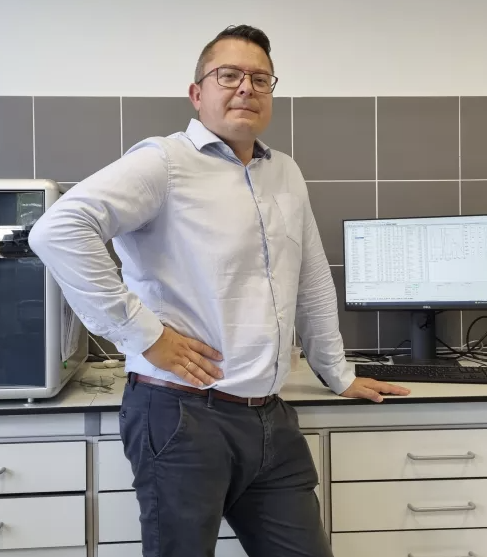
Research Mobility and International Collaboration: Dr Hilal Unyay’s Experience
Dr Hilal Unyay, a researcher at Lodz University of Technology, shares her experience of participating in the BioTrainValue project and undertaking a secondment at the University of Ljubljana in Slovenia.
In this video, she discusses the research she worked on during her secondment and explains how the experience helped her gain practical research skills, develop new technical competencies and access specialised equipment and research facilities through international collaboration. She also reflects on the knowledge gained through project seminars and the value of exchanging ideas with researchers from different institutions.
Discover how BioTrainValue has supported her professional development, opened up new scientific perspectives and research directions, and fostered lasting international collaborations that continue through joint research ideas and publications.
MSCA Staff Exchanges: Introducing BioTrainValue
On 25 February 2026, Prof. Szymon Szufa presented the BioTrainValue project during an online information session dedicated to Marie Skłodowska-Curie Actions (MSCA) Staff Exchanges. The session was organised as part of information activities supporting researchers interested in MSCA programmes and attracted 63 participants.
The presentation introduced BioTrainValue, which focuses on biomass valorisation through superheated steam torrefaction, pyrolysis and gasification, while promoting multidisciplinary research training and international collaboration. The session provided an opportunity to learn about the project’s objectives and its approach to developing researchers’ skills and advancing sustainable biomass conversion technologies.
Speaker: Szymon Szufa, BioTrainValue project representative
MSCA Staff Exchanges in Practice: The BioTrainValue Experience
On 9 June 2026, Prof. Szymon Szufa delivered a presentation about the practical implementation of MSCA Staff Exchanges, using BioTrainValue as an example. The session formed part of information activities dedicated to the Marie Skłodowska-Curie Actions programmes, organised by the Polish Academy of Sciences’ Scientific Excellence Office (BDN PAN) and the Polish National Agency for Academic Exchange (NAWA).
The presentation highlighted how MSCA Staff Exchanges support international research collaboration, knowledge exchange and the professional development of researchers. Using BioTrainValue as a case study, it introduced the project’s multidisciplinary approach to biomass valorisation through superheated steam torrefaction, pyrolysis and gasification, as well as the role of international cooperation and research training in achieving its objectives.
Speaker: Szymon Szufa, BioTrainValue project representative
Strategic Analysis to Develop Promising Bio-Based Niches: The Case of Biogas
On 18 June 2026, Professor Stelios Rozakis from the Technical University of Crete, a partner in the BioTrainValue project, delivered a lecture at Lodz University of Technology. The session took place at the LabFactor building and was attended by approximately 40 participants.
The lecture focused on “Strategic Analysis to Develop Promising Bio-Based Niches: The Case of Biogas”, exploring how strategic analysis and decision-making methods can support the identification and development of promising opportunities in the bioeconomy. Using biogas as a case study, the presentation highlighted the importance of analytical approaches in evaluating bio-based opportunities and supporting informed policy and investment decisions.
Professor Stelios Rozakis is Professor of Operations Research in Agriculture and Energy and Director of the Bioeconomy and Biosystems Economics Lab at the Technical University of Crete, Greece. His research focuses on decision theory and operations research methods applied to agriculture and the bioeconomy, with an emphasis on policy analysis and decision-making. He has authored more than 80 peer-reviewed publications in agricultural and environmental economics, energy policy and operations research.
The lecture contributed to BioTrainValue’s knowledge-sharing and training activities, providing an opportunity to exchange expertise and strengthen collaboration between project partners.
To explore the topic further, view the lecture presentation -> HERE

Energy Saving Systems and Technologies with Life Cycle Assessment (LCA)
As part of the BioTrainValue project’s research training activities, the Technical University of Crete (TUC) organised an intensive training seminar entitled “Energy Saving Systems and Technologies with LCA” during the first semester of 2025. The training was developed in collaboration with the BioTrainValue coordinator and project partners to address researchers’ knowledge needs in life cycle assessment (LCA) and sustainable energy technologies.
The programme consisted of eight lectures, totalling 24 hours, and was designed to strengthen participants’ understanding of energy efficiency, environmental assessment and techno-economic evaluation. Topics included energy-saving technologies in buildings and shipping, air emissions and their external costs, the use of Life Cycle Assessment, and the application of techno-economic analysis (TEA) to energy systems. Participants also explored practical applications of tools such as SimaPro and RETScreen Expert through examples and case studies, including greenhouse infrastructure and maritime transport.

The seminar was organised by the Industrial, Energy and Environmental Systems Laboratory, coordinated by Professor Spiros Papaefthimiou at TUC, with the involvement of Professor Stelios Rozakis and the BioTrainValue team. The syllabus was approved by the TUC Senate, and participants could obtain 2 ECTS upon successful completion.
Approximately 18–20 participants from BioTrainValue partner institutions took part, including researchers from the National Institute of Chemistry (NIC), Technical University of Crete (TUC), Lodz University of Technology (TUL), the Polish Academy of Sciences (APS) and Arigna Fuels.
The training strengthened participants’ knowledge of environmental assessment and energy systems, supporting BioTrainValue’s objectives of research capacity building, knowledge exchange and international collaboration.
Environmental Economics & Policy: Training in Sustainable Decision-Making
As part of the BioTrainValue project’s training and knowledge-sharing activities, the Technical University of Crete (TUC) delivered an online course entitled “Environmental Economics & Policy”, taught by Dr Katerina Troullaki, between March and July 2026. The course comprised 36 hours of training delivered across 12 sessions, with each session lasting three hours.
The course explored how economic principles and decision-making tools can be applied to environmental and sustainability challenges. Its topics included environmental economics, sustainable development, climate policies, ecological economics, green technologies, and the economic evaluation of environmental policies and projects.
A particular focus was placed on Multi-Criteria Decision Analysis (MCDA), which helps evaluate complex decisions involving economic, environmental, social and technical criteria. Participants were introduced to several MCDA methods, including the Analytic Hierarchy Process (AHP), TOPSIS, PROMETHEE and ELECTRE. The teaching programme combined theoretical lectures with practical exercises, interactive discussions, case studies and project presentations. Through practical assignments, participants applied alternative MCDA methods to published research, compared methodological outcomes and developed analytical skills relevant to environmental research and policy development.
The course comprised 12 teaching sessions of three hours each, amounting to 36 hours in total. Researchers from three BioTrainValue partner institutions—BEST, Lodz University of Technology (TUL) and the Technical University of Crete (TUC)—participated in the training.
By combining economic theory with practical analytical methods, the course supported the development of expertise in environmental policy assessment and sustainable decision-making, contributing to BioTrainValue’s broader research training and capacity-building objectives.
Maturity of Torrefaction Technology and Industrial Applications


On 16 May 2024, dr. Szymon Szufa from Lodz University of Technology delivered a lecture at the Technical University of Crete in Chania, Greece, during his research secondment within the BioTrainValue project. The lecture was addressed to postgraduate students studying Sustainable Engineering.
The presentation, entitled “Maturity of Torrefaction Technology and Industrial Applications”, focused on the technological development of biomass torrefaction and its potential for industrial implementation. Prof. Szufa discussed different reactor designs used in torrefaction and compared their construction, as well as the advantages and disadvantages of different heat-transfer methods between biomass and heating media. The lecture also explored the techno-economic aspects of torrefaction systems, including alternative heat sources and steam generation technologies using biomass, gas, oil, coal and electric boilers. Through five case studies, the presentation addressed technical and economic evaluation, SWOT and PEST analyses, operating and maintenance costs, safety considerations, capital expenditure (CAPEX), operating expenditure (OPEX) and return on investment (ROI). In addition, the session examined the international market for biomass torrefaction technology providers, considering developments in Europe, the United States, Canada, India, Australia and China.
The lecture gave students insight into the challenges and opportunities involved in scaling up torrefaction technologies, linking fundamental knowledge with industrial applications and investment considerations. It also contributed to knowledge exchange and research training between Lodz University of Technology and the Technical University of Crete.
Torrefaction Processes and Climate Change Mitigation
On 27 April 2024, dr. Szymon Szufa from Lodz University of Technology delivered a lecture at the Technical University of Crete in Chania, Greece, during his research secondment as part of the BioTrainValue project. The lecture was addressed to Greek and international postgraduate students studying Sustainable Engineering.
Entitled “Torrefaction Processes and Climate Change Mitigation”, the lecture explored the role of biomass in the energy and agricultural sectors, with particular attention to woody and agricultural biomass resources in Poland, Greece and other European Union countries. Dr. Szufa introduced the main thermochemical biomass conversion processes, including drying, pyrolysis, torrefaction, gasification and combustion. The lecture explained the differences between these technologies and their potential applications in biomass utilisation and renewable energy production.
The session provided students with an overview of biomass valorisation technologies and their relevance to more sustainable energy systems and climate change mitigation. It also supported the exchange of scientific knowledge between Lodz University of Technology and the Technical University of Crete.
School Outreach & Educational Workshops
2026
Exploring Sustainable Biomass Technologies at LabFactor (2026)
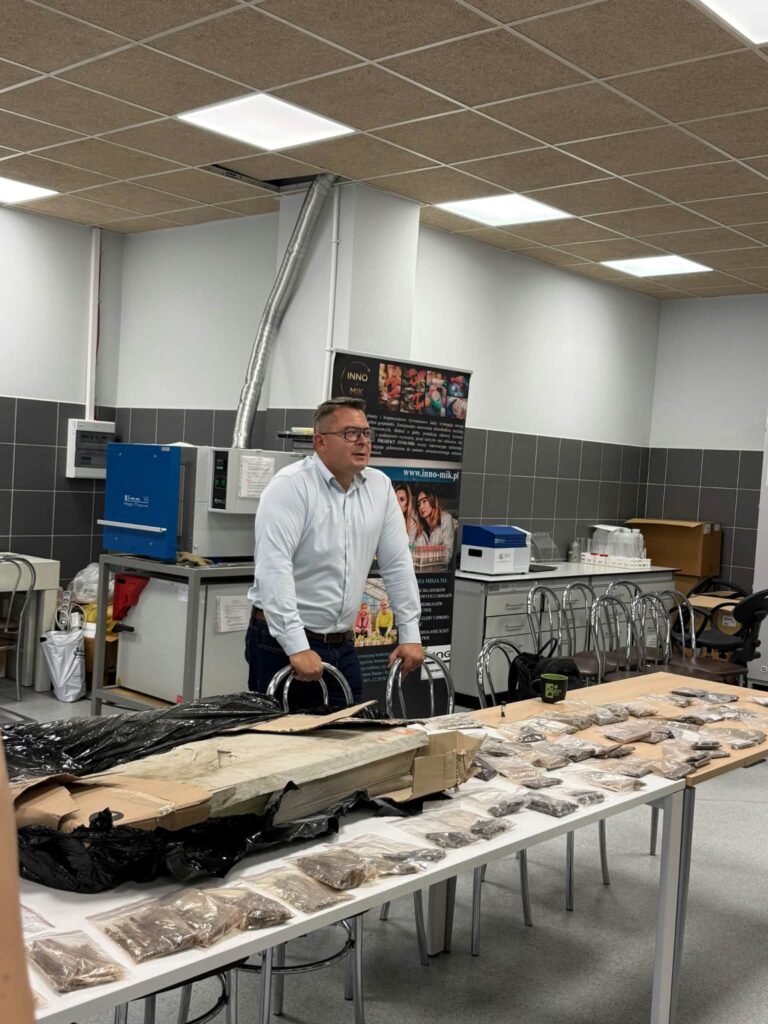
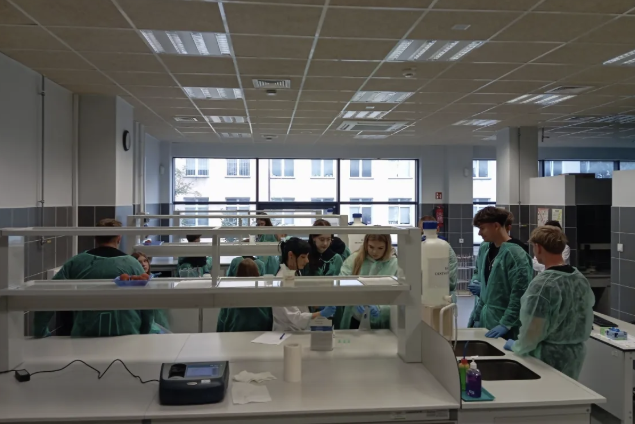
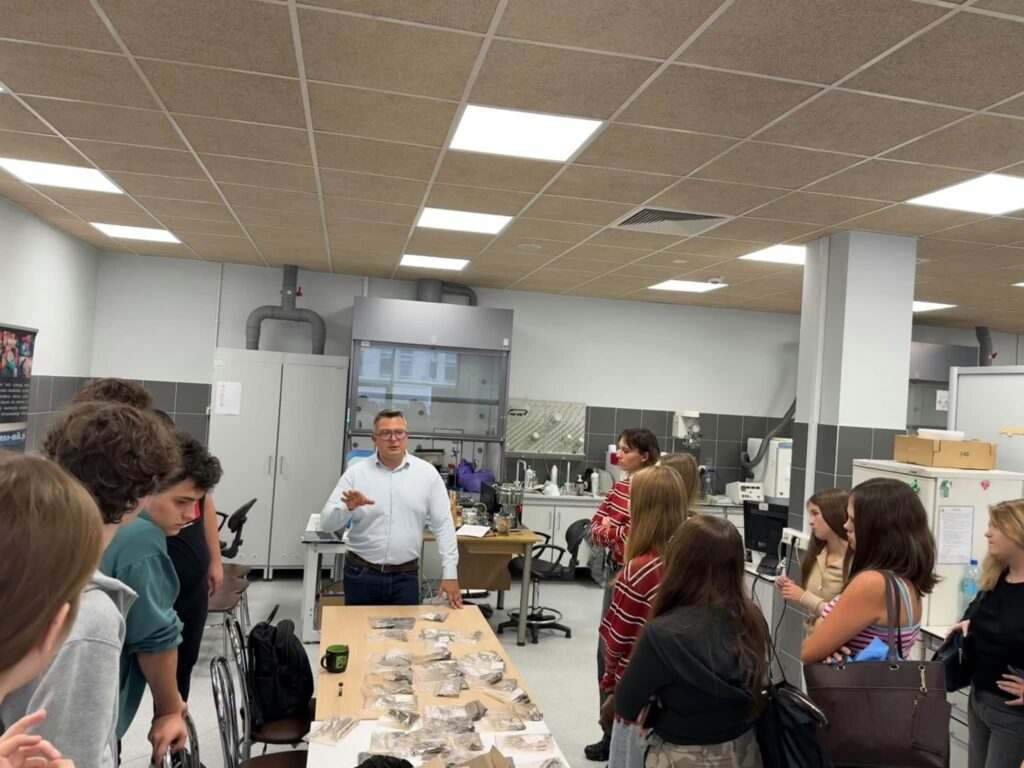
On 10 September 2026, LabFactor at Lodz University of Technology hosted another series of educational workshops as part of the 16th edition of the Week of Mathematics, Physics and Chemistry. The programme welcomed high school students from Poddębice, Tomaszów Mazowiecki, Sieradz and Wieluń, offering them an opportunity to discover research conducted at the university. During the event, Prof. Szymon Szufa and Dr Hamza Khan Suddozai delivered workshops for four groups, reaching approximately 60 students. The sessions introduced biomass torrefaction and hydrothermal carbonisation, highlighting the differences between these processes and the properties of the materials they produce. The students learned how processing conditions can influence product characteristics and explored potential applications of biomass-derived materials. The presentations also introduced the objectives of BioTrainValue and explained how international research collaboration supports the development of innovative biomass conversion technologies. By showing how biomass can be transformed into materials with practical applications, the workshops highlighted the links between scientific research, renewable resources and environmental sustainability. The visit also provided students with an insight into research opportunities at the Faculty of Process and Environmental Engineering and encouraged them to consider future studies in science and engineering.
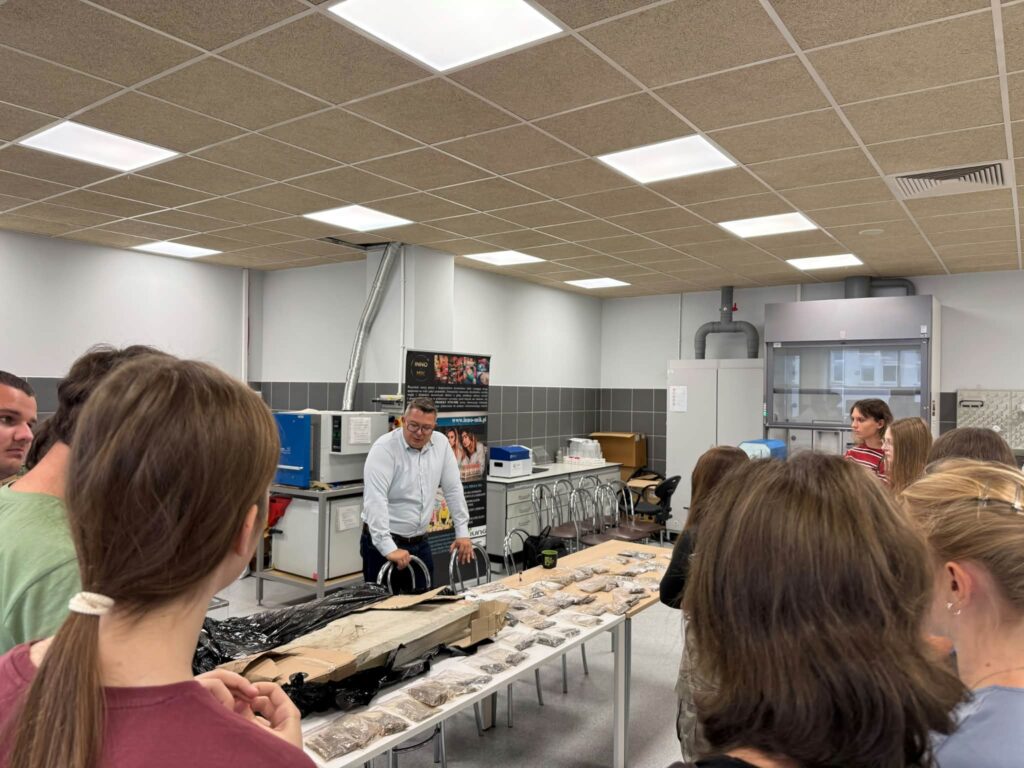
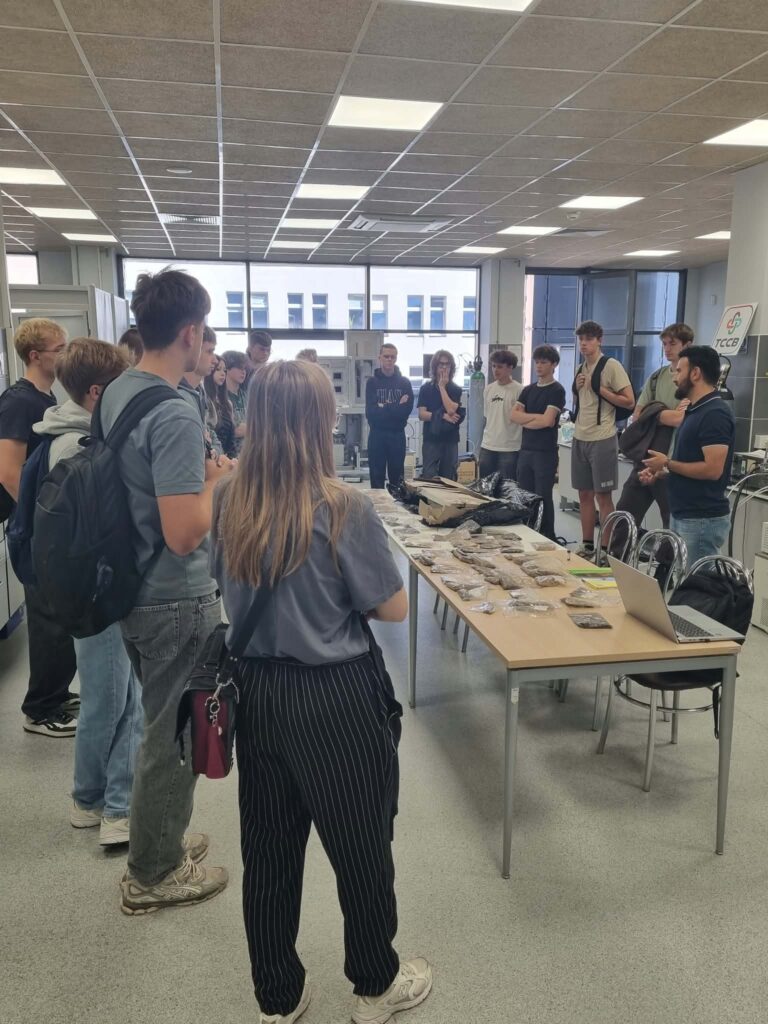
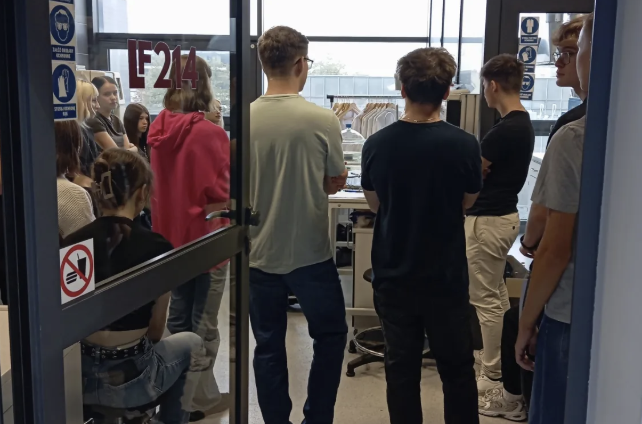
Read more about the 2026 event on the official Lodz University of Technology website.
2025
From Biomass to Valuable Products: Torrefaction and Pyrolysis (2025)
How can agricultural biomass be transformed into useful products? This question was at the heart of the BioTrainValue educational workshops held at LabFactor in September 2025. The activities formed part of the 15th edition of the Week of Mathematics, Physics and Chemistry at Lodz University of Technology, which welcomed 202 students from secondary schools in Poddębice, Tomaszów Mazowiecki, Sieradz and Wieluń. Within this programme, Prof. Szymon Szufa and Dr Omar Mohammad from Aston University conducted workshops for four groups, reaching approximately 60 students. Their sessions explored biomass torrefaction and pyrolysis, explaining how these thermal conversion processes transform biomass and how operating conditions influence the characteristics of the resulting products. The presentations discussed the potential applications of biomass-derived materials and their relevance to renewable energy and resource recovery. Students were also introduced to the research activities undertaken within BioTrainValue and the importance of international cooperation in developing sustainable biomass conversion technologies. The workshops connected scientific concepts with practical research and encouraged participants to discover how engineering can contribute to a more sustainable use of renewable resources.
Read more about the 2025 event on the official Lodz University of Technology website.
2024
Introducing High School Students to Torrefaction and Biogas Production (2024)
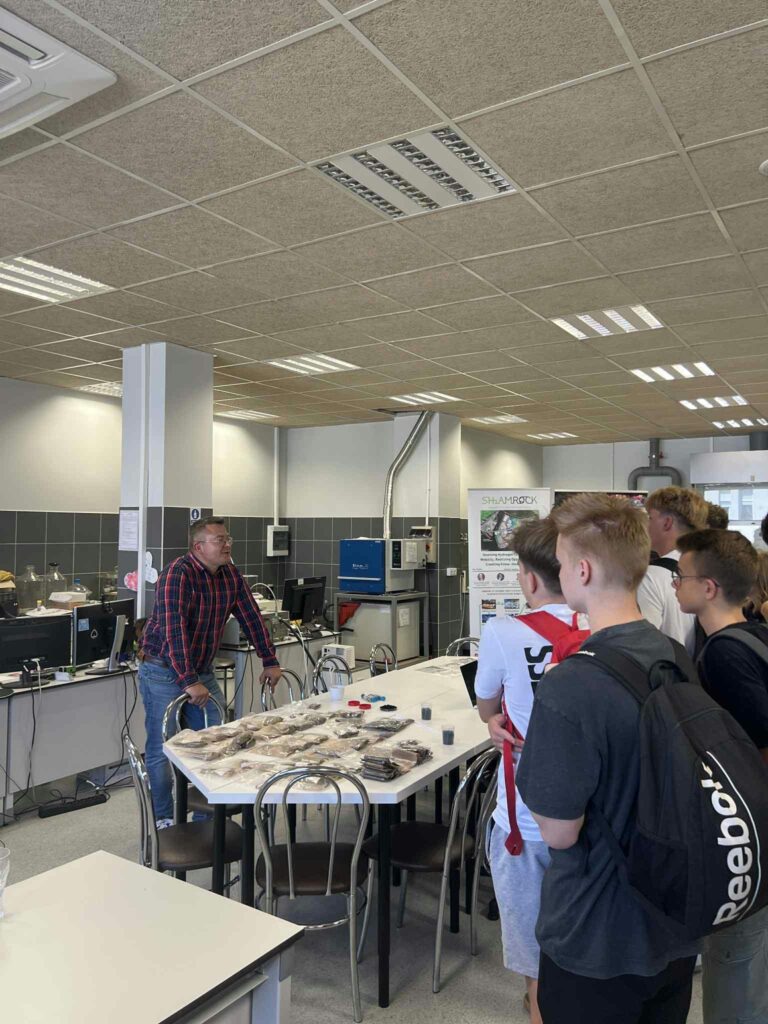
In September 2024, the BioTrainValue team welcomed high school students to LabFactor at Lodz University of Technology as part of the 14th edition of the Week of Mathematics, Physics and Chemistry. The wider event brought together 158 students from four secondary schools: LO in Poddębice, I LO in Tomaszów Mazowiecki, I LO in Sieradz and II LO in Wieluń. As part of the programme, dr. Szymon Szufa, together with Phd student Hilal Unyay, delivered workshops for four groups of students, reaching approximately 60 participants. The sessions focused on biomass torrefaction and biogas production, introducing students to the processes involved, the properties of the resulting products and their potential applications. Particular attention was given to the role of biomass conversion in the development of more sustainable energy systems. The presentations also highlighted the objectives of BioTrainValue and the opportunities created through international research collaboration. By combining scientific explanations with practical examples, the workshops offered students an insight into ongoing research at the Faculty of Process and Environmental Engineering. The activities aimed to inspire young people to explore chemical engineering, renewable energy and environmental technologies as possible future fields of study.
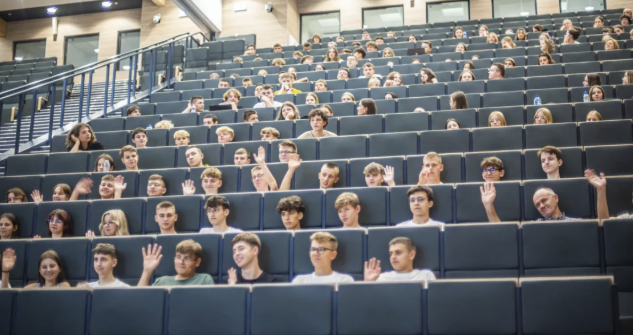
Read more about the 2024 event on the official Lodz University of Technology website.